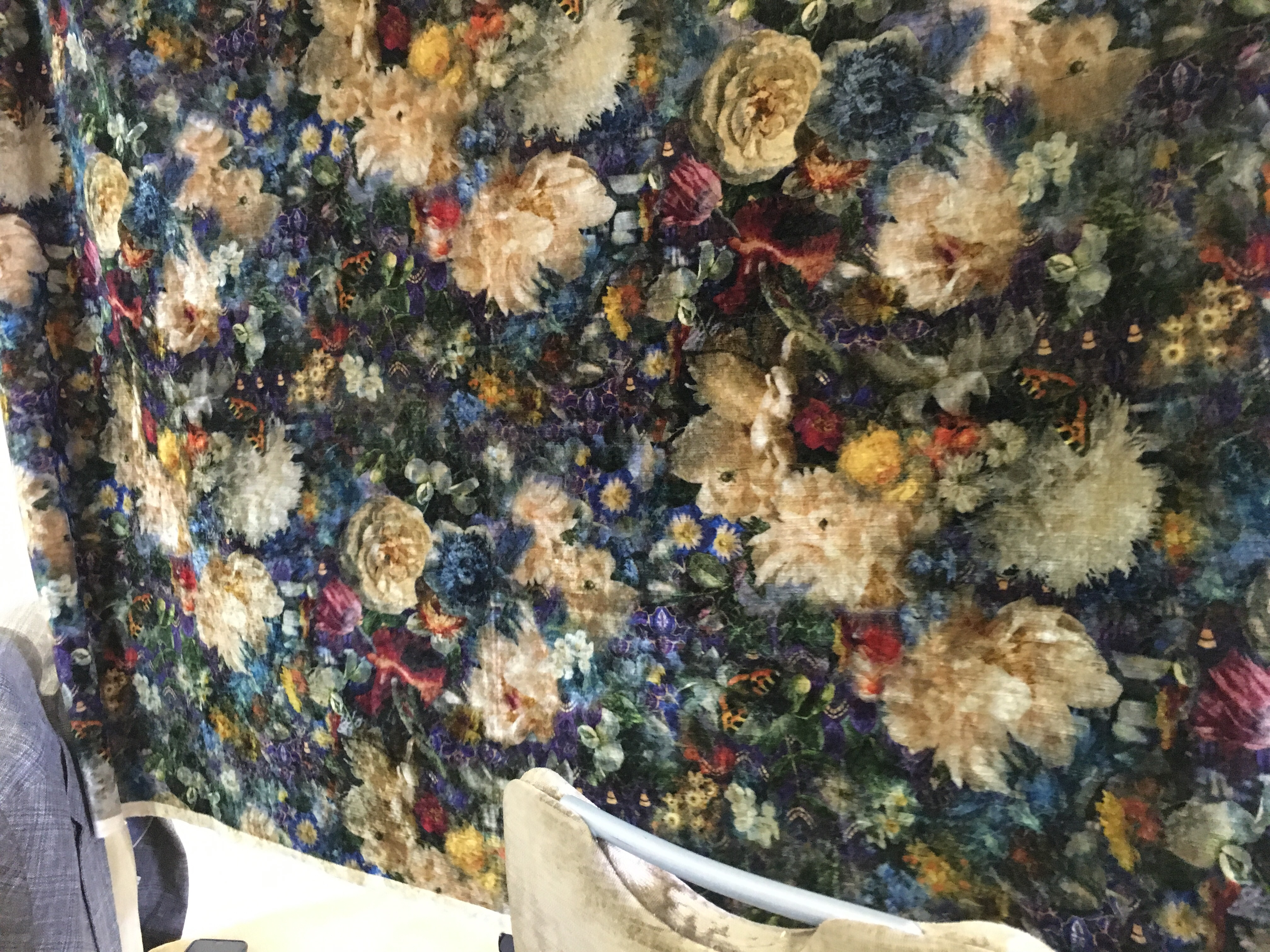
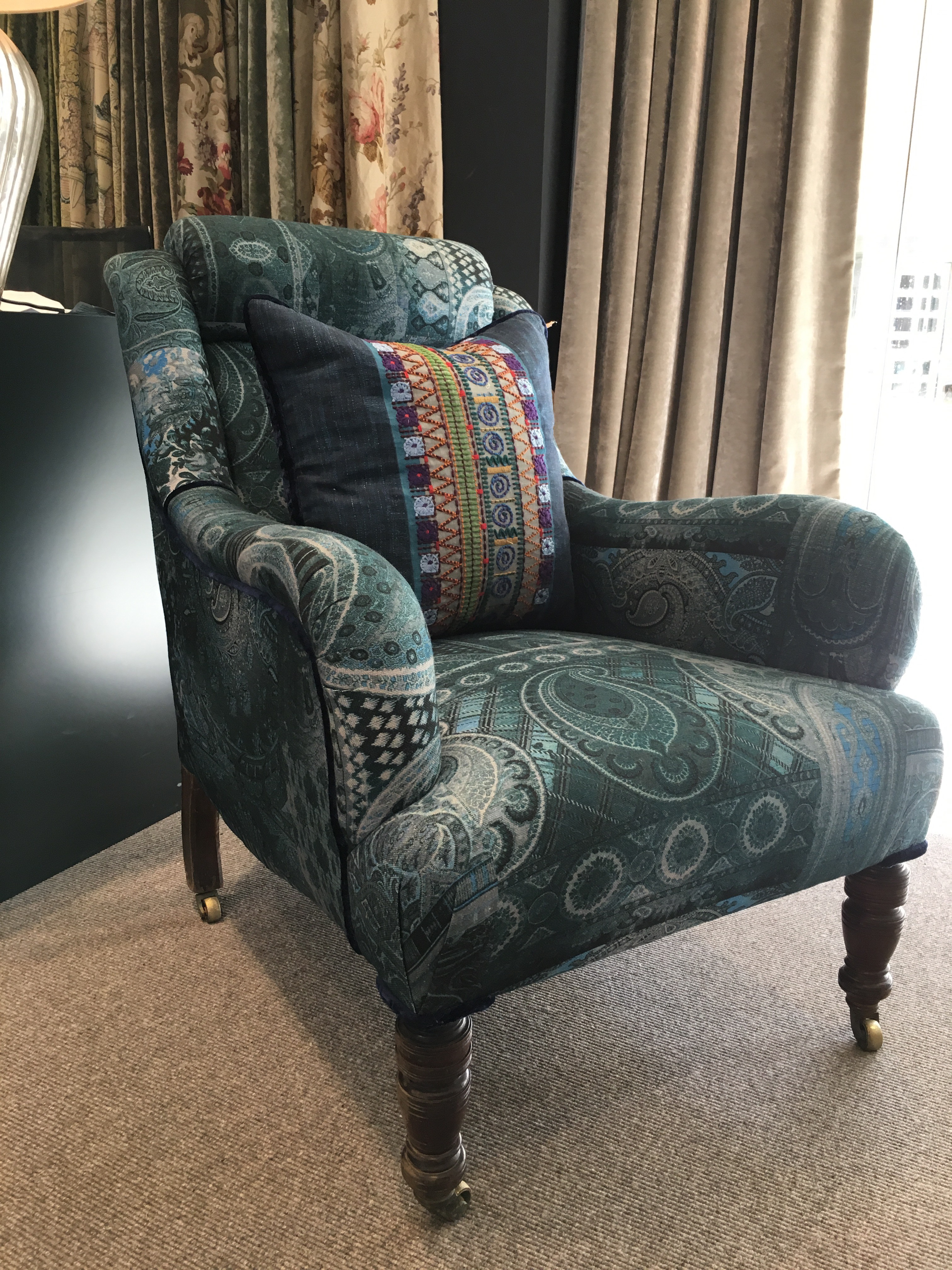
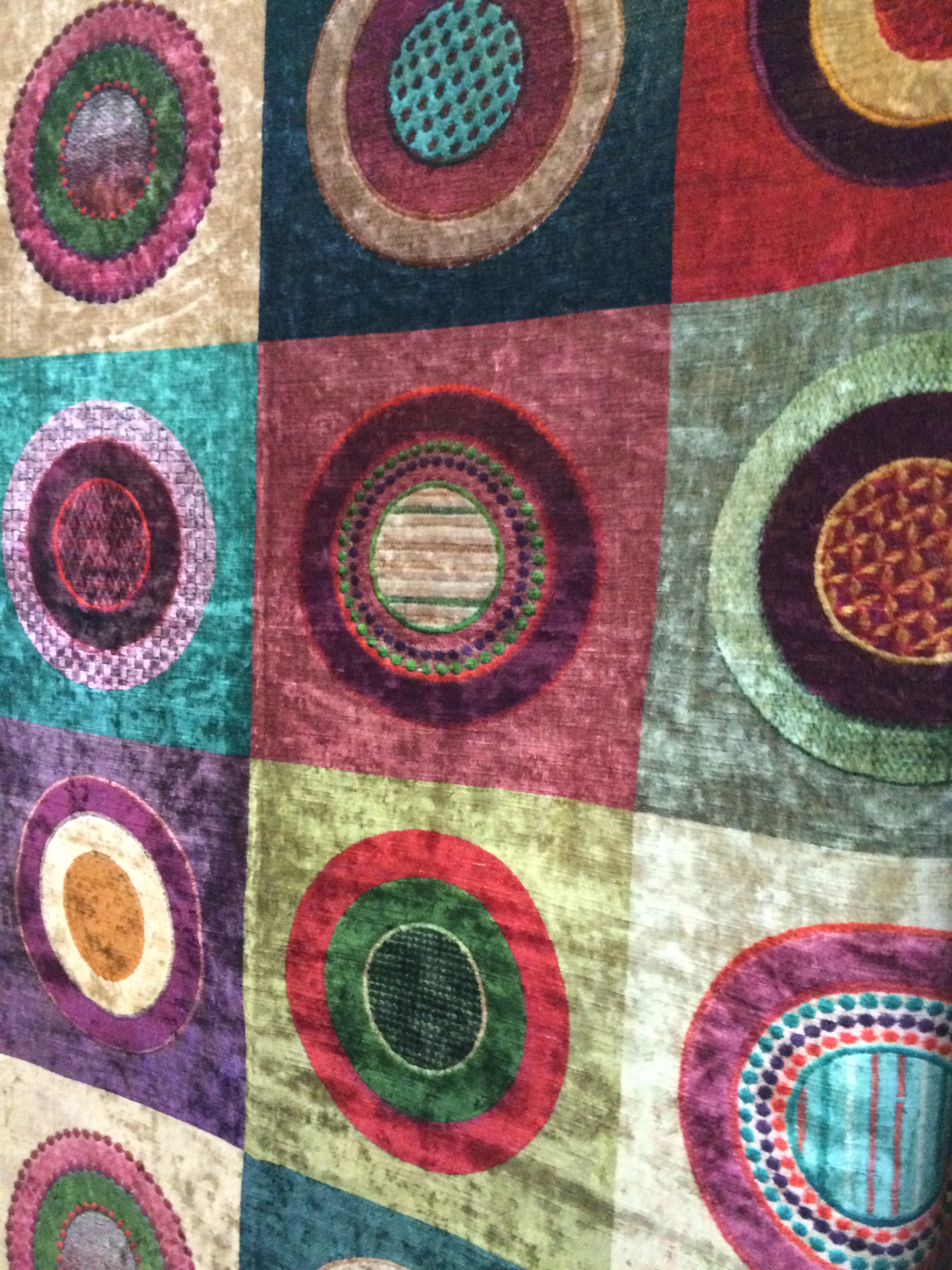
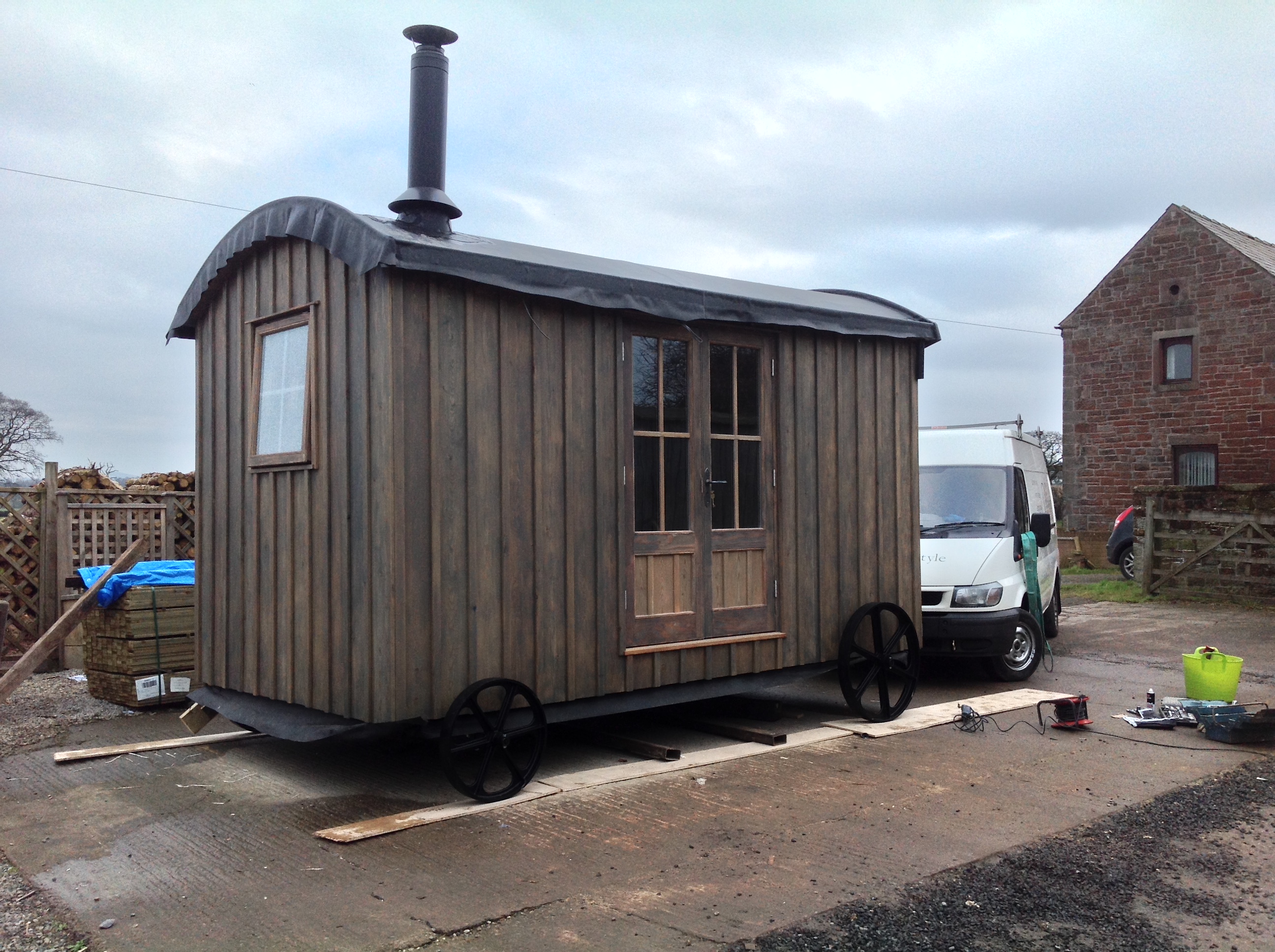
This has got to be my most unusual request from a customer. We were fortunate to work with a very lovely client with a beautiful holiday cottage in our area. One day she came into our showroom with her husband who had a large sticking plaster on his head. She had a request, for us to make a removable, cleanable, padded cover to cover a beam that was in a very tricky position at the top of the stairs. Most people had learned to duck but her husband was quiet tall and had collided with the beam on a number of occasions, the latest being that morning. The following pictures show the solution !
Starting work with two layers of polyester and a layer of woollen wadding
Our training courses are back and we are very excited about it !!!
It has been a few years now since we held courses and we are still asked about them. So with much consultation with “the team” here, we are hosting a selection of days full of professional information and inspiring ideas for students of all levels, they are also infomal and fun. Whether you want to make curtains and blinds professionally or just want to make curtains to be really proud of for your own home, our courses are perfect for you. For the basic curtain day all we ask is that you can hand sew to a reasonable level and can use a basic sewing machine – you can leave the rest to us.
Initially we are running just three days but if you can’t make these dates, there will be more to follow as workroom commitments allow. Courses are for a maximum of 6 people, why not come with a friend or give a course as a gift to someone special.
Our workroom
From Stables to showroom/workroom in 150 years
Street view
Monday 21st May – Beginners Curtain Making
This course will start from the absolute basics so if curtain making is something you have always wanted to try or you have tried and aren’t happy with the results – this course is the one for you.
Measuring your window
Choosing the correct fabric and style
Calculating fabric quantities
Cutting
Matching patterns
Making up a sample curtain
Simple headings
Monday 11th June – Advanced Curtain Making
This course is for those who wish to take their curtain making further and builds upon the skills from our beginners course or previous experience. Interlined curtains are perfect for adding that luxurious touch to any room as well as being an amazing asset to keeping out the cold.
Types of suitable fabrics
Which weight of interlining to use
making up an interlined sample curtain
Calculating and forming hand pleated headings
Fitting and dressing curtains
Monday 25th June – Roman Blind Making
Roman blinds can look stunning in any manner of design styles. Their simplicity works with both modern and traditional and is a useful way of using a costly fabric without breaking the budget.
Measuring
Selecting fabric
Calculations,
Blind systems
Cutting and placing the pattern
Making up a sample blind
Fitting
The price for the day is £95 plus VAT including all materials, use of equipment, course notes, tea,coffee and juice. You will need to bring a packed lunch. Payment is due at time of booking.
On the day
9.45 a cup of coffee and introduction to the course content
10am course part 1
12.30 – 1.00 break for lunch
1 – 4.30pm course part 2
If you have any queries or to book a place please contact us – details below.
Anyone attending the course is welcome to browse the hundreds of books in our showroom and for 3 months after the course they will be entitled to a 10 percent reduction on fabrics, wall covering and items required for making curtains and blinds.
For more information and to book please contact us on: 01768 863 895 or
I am always being asked about the regulations about covering furniture – I hope this explanation helps a little.
Flame retardancy regulations on fabrics for upholstery are compulsory I am afraid. There are laws about what you can and can’t use both at home and in commercial premises. These same rules apply in 177 countries – though not in Europe for some very strange reason. These rules are of course for our own safety so although it may make the item of furniture a little more expensive it has to be worth it. If you think that is an exaggeration check out this short video.
So what are these rules?
The rules apply to all domestic upholstered seating furniture as well as childrens furniture, and it includes pouffes, music stools, footstools and floor cushions – except furniture manufacture prior to 1950
There are all sorts of complex and confusing words but I thought it would be good to have it written down in very straightforward terms. It certainly would help me to be able to explain to my customers in simple terms rather than relying on the rather hazy information in pattern books which always leaves me thinking “ what does that mean and does it apply to me”
Firstly for most of us it boils down to whether the fabric is going to be used in a domestic (which falls under BS standard BS5852 for domestic upholstery) or commercial ( BS standard 7177) situation. BS 7176 covers all three standards
But for everyone making or reupholstering furniture –
all filling materials must meet specified ignition tests
all upholstery must be cigarette resistant
furniture must be permanently labelled
furniture must be display labeled
furniture suppliers must maintain records for five years
What are the tests and how are they carried out
The cigarette and match tests fall under BS 5852. The tests involve the fabric being exposed to different ‘ignition sources’ essentially simulating possible real life causes of domestic fires. The ‘ignition sources’ are ways that the fabric could plausibly be burnt. There are 8 different sources/types of combustion but you only normally need to deal with sources 0, 1 and 5.
Principle: Different ignition sources are applied to a constructed test rig (simulated upholstered chair) to examine the burning behaviour of a test material.
Test Method: A test rig is constructed in order to simulate the back and seat of a chair with the fabric to be tested. Most testing is conducted over standard foam to give the “worst case” scenario though in practice other fillings such as horsehair or feather may be used which are much less flammable. This rig is subjected to different ignition sources. There are 8 types of ignition sources, each with different heat intensity. They are classified from 1 to 8, the intensity doubling compared to the preceding source. The most frequently used are ignition source 0, 1 and 5. -Source 0: smouldering cigarette. A cigarette is put along the crevice of the test rig and allowed to burn over its entire length. If no flaming or progressive smouldering is observed on both cover and interior material, the test is recorded as no ignition and the material passes the test. -Source 1: simulated match. A burner is lighted, held along the crevice of the test rig for 20s and then removed. After 2 minutes if no flaming or progressive smouldering is observed on both cover and interior material, the test is recorded as no ignition and the material passes the test. -Source 5: wooden crib 5. A crib is composed of wooden planks, glued together. Lint is attached to the bottom. After adding propane-diol the crib is placed on the test rig and ignited with a match. If no flaming or progressive smouldering on both cover and interior material, the test is recorded as no ignition and the material passes the test.
Result: The test material passes or fails this test.
Types of fabrics suitable for upholstery
Well it broad terms the fabric, apart from fitting your design requirements, needs to be practical for your particular use eg a lightweight fabric for a bedroom chair which is used simply as a place to put your clothes at night or something much harder wearing for a family sofa. I think that aspect is a basis for another weblog sometime in the future.
If it is not inherently flame retardant ( eg wool meets the domestic standards required without any further treatment) there are two choices on the domestic front but only one for commercial use.
For Domestic use
1. The fabric can be backcoated to comply with the standard. This must be done by professionals and a test certificate supplied.
2. Personally I don’t like the feel of fabrics once they have been treated I much prefer to have a flame retardant liner on the piece of furniture and then you can use the fabric untreated as long as it has more than 75% by weight natural fibres in its content, (cotton, silk, viscose, wool). This of course adds to the cost of the finished item as in effect the furniture is upholstered twice and has two layers of fabric, but well worth it if you can afford it within your budget. Don’t forget you will be saving the cost of the retardancy treatment which can be between £4 and £8 per metre. ON top of that you have to provide the treatment company with at least an extra half metre to allow for shinkage and for them to test the finished product to provide you with a certificate.
For Commercial use
The fabric has to be treated to Crib 5 standard by backcoating
A sample of the cover fabric which has been treated with a flame retardant chemical must undergo a cleansing procedure (a 30 minute water soak) prior to match or cigarette testing.
As you can imagine there are many other rules and regulations on this subject and another occasion we may delve into regulations for curtains. The rules for beds and bedding are another world too. I do hope that the information helps you a little when you are searching for a fabric to re-upholster for a much loved piece of furniture.
The words above are true to the best of my knowledge but should you need more detailed information try contacting FIRA or checking out their website www.fira.co.uk
Welcome to my web log which I would love to see grow into a collection of useful, inspirational and informative ideas – which I hope doesn’t sound too pompous. I am an Interior designer with almost forty three years in the business and I specialise in bringing together the artistic as well as the technical side of my trade. In truth I have a massive thirst for knowledge and like nothing better than talking to people who specialise in all manner of subjects from creating beautiful fabrics, hand printing wallpapers, finding the right light fittings, manufacturing curtain tracks and poles to suit any situation, furniture restoration – yes I think you have got the idea. Anything at all that I or my customers might find useful. Add to that a love of computers and technology and well……..there just aren’t enough hours in a day are there.
I am based in Penrith Cumbria where I have a beautiful showroom, workroom and offices - all manned by lovely ladies many of whom have worked with me for many years. Oh and of course we mustn’t forget our wonderful fitter John, who believes nothing is fitted correctly until he can hang on it. Maybe we should include some tips and hints from him too.
It seems to me that there are lots of other people out who have the same thirst for knowledge but maybe don’t have the same access to all the ranges, companies and information so this is where I hope our web log will give us the opportunity for us to pass on what we have learned and with your help we can pass on even more information.
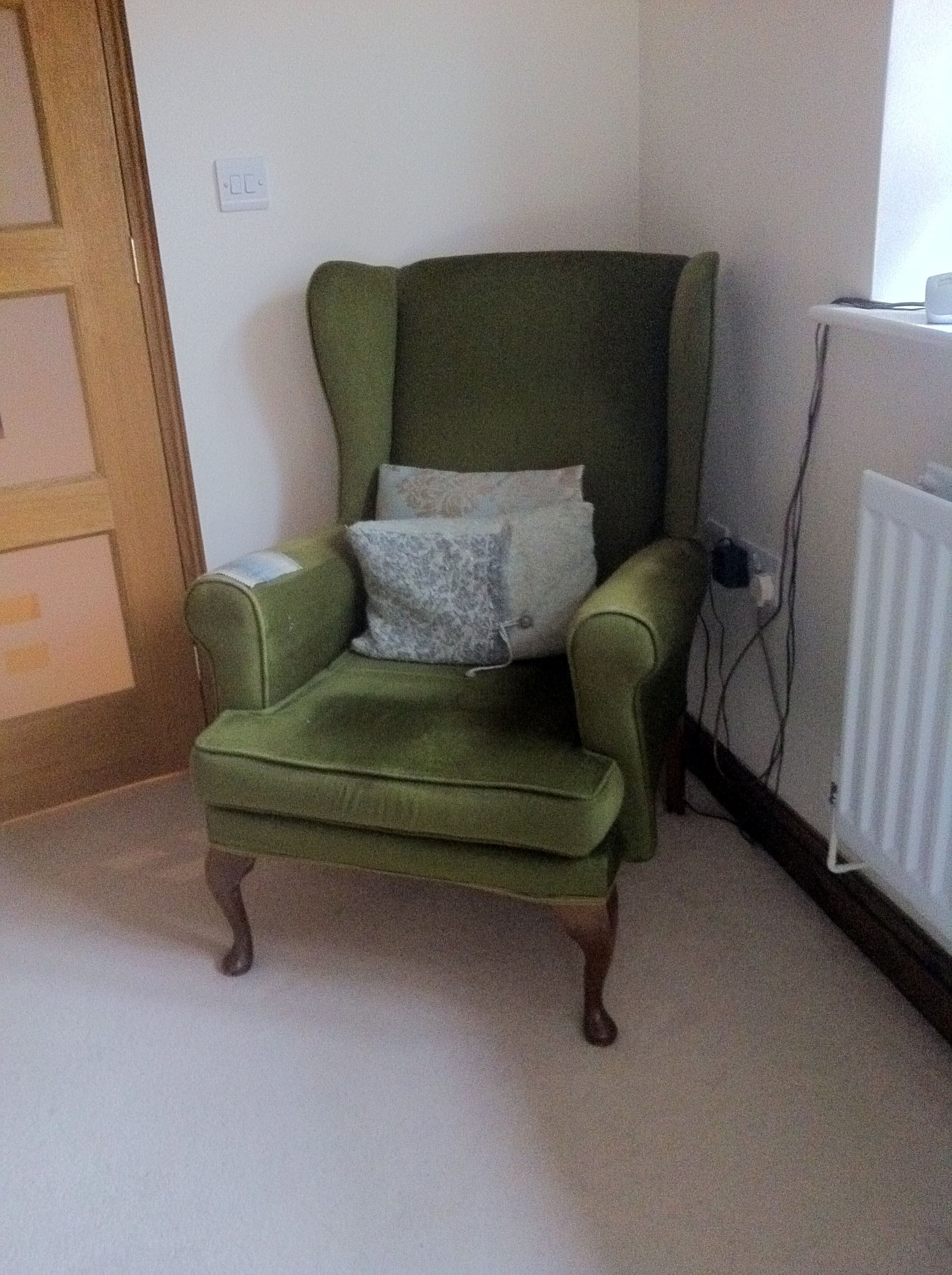
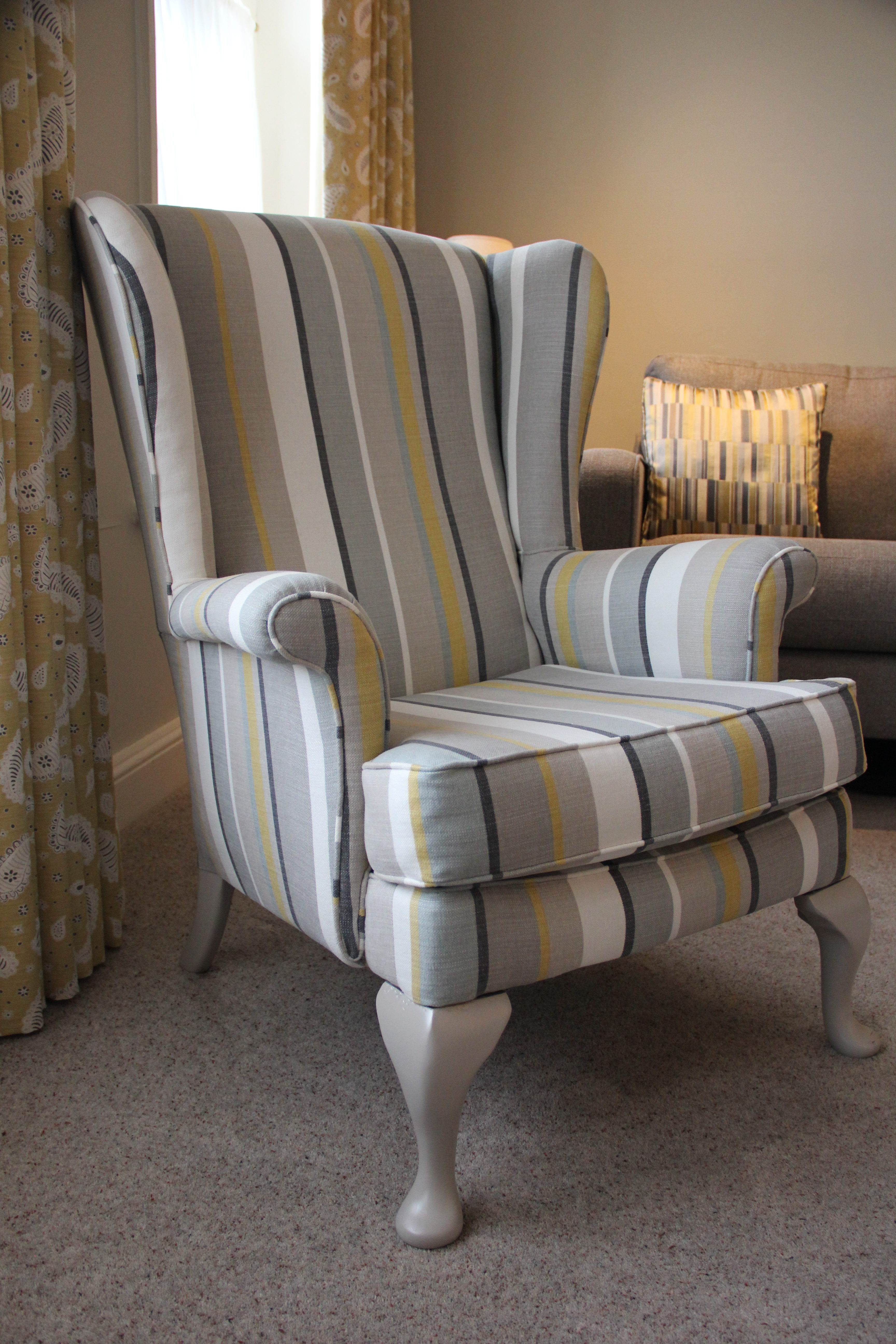
I recently had a client who wanted to purchase fabric to reupholster some chairs and didn’t want to pay the extra to bring the fabric up to the standard required. When I tried to tell her about the rules and regulations I realised that although I had the basic knowledge I didn’t understand it in much detail so for our first log I thought I would complete my research and write it down – in what I hope are straightforward terms. I hope it helps you to understand and I look forward to writing future logs. If there is a subject you would like to know more about and think I can help, please contact me. Equally if there is something you would like to tell me about and would like me to share with others – I look forward to hearing from you.